
Technical vs Fundamental Analysis: What’s the Difference and Which Is Better?
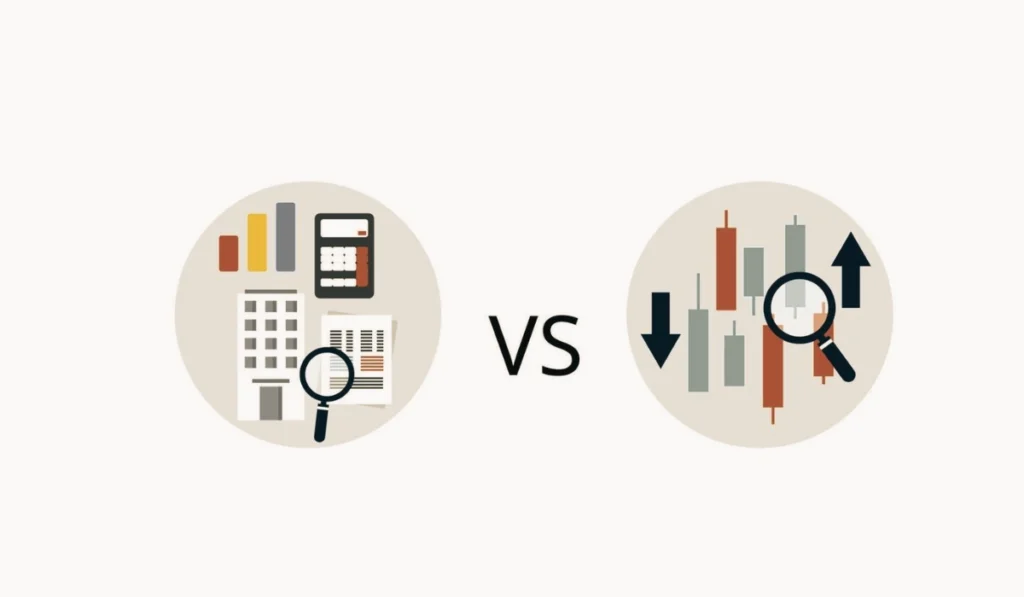
Navigating the financial markets can feel like attempting to forecast the weather. Whether you are eyeing up individual stocks, foreign exchange pairs, or crypto assets, every trading decision comes down to one question: Will the price go up or down? To answer that question, traders and investors rely heavily on two distinct methodologies: technical analysis and fundamental analysis. While both approaches share the ultimate goal of turning a profit, they take completely different routes to get there. One focuses on numbers, charts, and patterns, while the other evaluates business health, industry trends, and economic indicators. If you are wondering which strategy suits your investment style best, this guide breaks down technical vs fundamental analysis, exploring their pros, cons, and essential differences.
What Is Technical Analysis?
Technical analysis is the study of past market data-mainly price movements and trading volume-to forecast future price direction. Traders who rely on this method believe that all known information about an asset is already built into its current price.
Instead of reading annual reports or news headlines, technical analysts spend their time studying stock charts, trendlines, and mathematical indicators. They watch for recurring price patterns like “double bottoms” or “head and shoulders,” which suggest potential trend reversals. They also map out support and resistance levels to pinpoint where prices are likely to pause or bounce, using tools like Moving Averages or the Relative Strength Index (RSI) to gauge market momentum.
What Is Fundamental Analysis?
Fundamental analysis measures an asset’s intrinsic (true) value by evaluating economic factors, industry trends, and business performance. Investors using this approach focus on the long-term potential of the underlying asset rather than daily price fluctuations.
To do this, fundamental analysts examine company financial reports-such as balance sheets and earnings statements-to evaluate profit and debt levels. They also compare valuation ratios like the Price-to-Earnings (P/E) ratio against industry peers, while keeping a close eye on broader economic conditions like interest rates and inflation. If an asset’s market price is lower than its calculated intrinsic value, fundamental analysts see it as an undervalued buying opportunity. If the price is higher, it is considered overvalued.
Technical vs Fundamental Analysis: Key Differences
To better understand how these two methods stack up, let us examine their main points of divergence.
| Feature | Technical Analysis | Fundamental Analysis |
| Core Focus | Price action, charts, and market psychology | Financial health, earnings, and business value |
| Primary Goal | Determine when to buy or sell (Timing) | Determine what to buy or sell (Value) |
| Time Horizon | Short-term to medium-term (minutes to weeks) | Medium-term to long-term (months to years) |
| Data Sources | Price charts, trading volume, technical indicators | Financial statements, economic reports, news |
| Best For | Day traders, swing traders, and scalpers | Value investors, buy-and-hold investors |
Pros and Cons of Technical Analysis
Like any strategy, technical analysis comes with distinct advantages and drawbacks.
The Pros
- Actionable Timing: Technical analysis shines when it comes to identifying precise entry and exit points, helping you manage risk effectively.
- Versatility: Chart patterns and indicators apply across almost any liquid asset class, including stocks, forex, commodities, and crypto.
- Efficiency: You do not need to spend days reading 100-page financial reports; a clear chart can provide insights in minutes.
The Cons
- False Signals: Markets are inherently unpredictable, and chart patterns fail frequently due to unexpected news or high volatility.
- Subjectivity: Two traders can look at the exact same chart and draw entirely different trendlines or conclusions.
- Ignores Reality: Focusing purely on charts means you might miss major fundamental shifts, such as a company facing bankruptcy or regulatory backlash.
Pros and Cons of Fundamental Analysis
Fundamental analysis offers a sturdy framework, but it is not without its challenges.
The Pros
- Long-Term Reliability: Over longer periods, market prices tend to align with a business’s true economic value, making fundamental analysis ideal for wealth creation.
- Informed Decisions: Studying financial health helps you avoid weak companies that look cheap on a chart but are fundamentally failing.
- Reduces Emotional Stress: Knowing you own a solid company makes it much easier to ignore short-term market noise and sudden price dips.
The Cons
- Time-Consuming: Reading financial reports, analyzing macroeconomic data, and keeping up with industry news requires significant effort.
- Poor Timing: A stock can remain severely undervalued for months or even years before the broader market catches on, tying up your cash.
- Complex Data: Interpreting accounting details and macroeconomic figures demands a relatively steep learning curve.
Which Analysis Method Should You Use?
Choosing between technical and fundamental analysis depends entirely on your trading goals, time availability, and personality.
Choose Technical Analysis If:
- You want to trade over short timeframes (day trading or swing trading).
- You prefer visual data, charts, and systematic rules over reading reports.
- You want clear risk management rules based on specific price levels.
Choose Fundamental Analysis If:
- You are investing for the long term (building a portfolio for retirement).
- You enjoy digging into business models, financial health, and economic trends.
- You want to build wealth passively without staring at charts all day.
Summary of Key Takeaways
Understanding the distinction between technical and fundamental analysis is vital for anyone entering the financial markets. Technical analysis focuses primarily on short-term price movements, volume, and chart patterns to time trades effectively. In contrast, fundamental analysis evaluates intrinsic value, financial health, and broader economic factors to identify strong long-term investments. Neither strategy is superior to the other; the right choice depends entirely on your time horizon, risk tolerance, and individual trading style. By matching your analytical approach to your personal financial goals, you set yourself up for far greater clarity and confidence in the markets.
