Commercial Property Investment: Types, Benefits, Risks and How to Make the Right Choice
When most people think about real estate, their minds go straight to residential homes buying a flat, flipping…
Read article →

Building lasting wealth through real estate is a time-tested strategy that has created more millionaires than almost any other asset class. However, stepping into the market without a clear blueprint can quickly transform a dream of passive income into a costly mistake. Whether you are looking to purchase your very first rental home or want to scale an existing portfolio, this comprehensive guide breaks down the core fundamentals of property investing. You will learn how to evaluate opportunities, manage risk, secure funding, and maximize returns to achieve true financial freedom.
Real estate stands apart from stocks, bonds, and crypto because it offers a unique combination of tangible value, steady income, and multi-dimensional growth. When done correctly, it provides five primary drivers of wealth creation.
Cash flow is the net income left over after paying all operating expenses, mortgage payments, and maintenance costs. Consistent, positive monthly cash flow acts as a reliable income stream that can replace or supplement traditional employment earnings.
Over long horizons, real estate historically trends upward in value. While local markets experience cyclical ups and downs, property values and rents generally rise ahead of general inflation, preserving and growing your purchasing power.
Unlike stocks, where you fund 100% of the investment with your own capital, real estate allows you to use bank financing. Each month, your tenants pay rent, effectively paying down your mortgage principal and building your home equity without additional outlay from your pocket.
Real estate offers significant tax benefits depending on your jurisdiction. Investors can often deduct standard operating costs, property management fees, mortgage interest, and asset depreciation to lower their overall taxable income legally.
Property values and rental rates typically adjust upward alongside rising consumer prices. When inflation increases, your fixed mortgage payment remains static while your rent roll and asset value grow, widening your profit margins.
Investors have several options when entering the real estate market. The right choice depends on available capital, risk tolerance, investment objectives and experience.
Residential property includes houses, flats, apartments and other homes occupied by individuals or families. Residential property investing is often attractive to beginners because rental demand can be easier to understand at a local level.
However, investors still need to consider vacancy periods, tenant turnover, repairs, insurance and local rental regulations.
Commercial assets include offices, retail spaces, industrial buildings and warehouses. Commercial property investment can potentially provide longer leases and different income characteristics compared with residential assets. At the same time, these investments may require greater capital and specialist knowledge. Demand can also be closely linked to economic activity and business conditions.
Some investors purchase properties that need improvement, renovate them and then sell or rent them. This approach can create value, but construction costs, planning requirements and unexpected delays can quickly affect profitability.
Consequently, renovation projects require careful budgeting and a realistic assessment of the property’s potential value after improvements.

Before committing capital, you must match your investment strategy with your personal goals, available time, capital, and risk tolerance.
This classic model involves purchasing residential property investing assets to lease to long-term tenants (typically 12-month agreements or longer).
Utilizing platforms like Airbnb or Vrbo to rent residential spaces on a nightly or weekly basis to travelers and holidaymakers.
Buying distressed assets below market value, renovating them quickly, and selling them for a short-term lump sum profit.
Real Estate Investment Trusts (REITs) allow individuals to invest in large-scale, income-producing real estate by purchasing public shares on major stock exchanges.
Success in property investing relies entirely on mathematical discipline rather than emotional attraction to a building. Below are the key metrics every investor must master before making an offer.
Gross yield evaluates the total annual rental income relative to the property purchase price, expressed as a percentage:
Gross Rental Yield=Purchase PriceAnnual Gross Rent×100
Example: A home bought for $300,000 that generates $1,800/month ($21,600/year) yields a gross return of 7.2%.
Net yield provides a clearer picture by taking all ongoing property investment costs-such as insurance, taxes, maintenance, and management fees-into account before dividing by total acquisition expenses:
Net Rental Yield=Purchase Price+Closing CostsAnnual Gross Rent−Annual Operating Expenses×100
This metric calculates the actual rate of return on the cash out-of-pocket deployed to secure the property, accounting for leverage (loans):
Cash-on-Cash Return=Total Initial Cash InvestedAnnual Pre-Tax Cash Flow×100
A quick screening rule of thumb stating that a prospective rental property should generate at least 1% of its total purchase price in gross monthly rent. While hard to find in premier capital cities, it remains a helpful benchmark for regional cash-flow markets.
The age-old real estate mantra-location, location, location-remains fundamental to performance. Evaluating an area requires analyzing both macroeconomic region trends and hyper-local neighborhood factors.
Never buy real estate based purely on photos or glossy agent pitch books. Rigorous due diligence separates top performers from bad investments.
How you structure financing determines your cash flow safety margin and ultimate portfolio scalability.
Lenders typically require a lower Loan-to-Value (LTV) Ratio for investment properties compared to owner-occupied homes. Expect to deposit 20% to 25% down to secure favorable commercial mortgage terms.
Macroeconomic shifts drastically influence monthly mortgage obligations. Understanding how interest rates affect property cash flows is essential when selecting fixed versus variable rate loans. When rates rise, debt servicing costs increase, making conservative debt underwriting critical.
As your portfolio scales, traditional banks may hit lending limits based on personal debt-to-income limits. Scaling past this wall requires looking at portfolio lenders, private financing, or partnering with equity partners using JV structures.
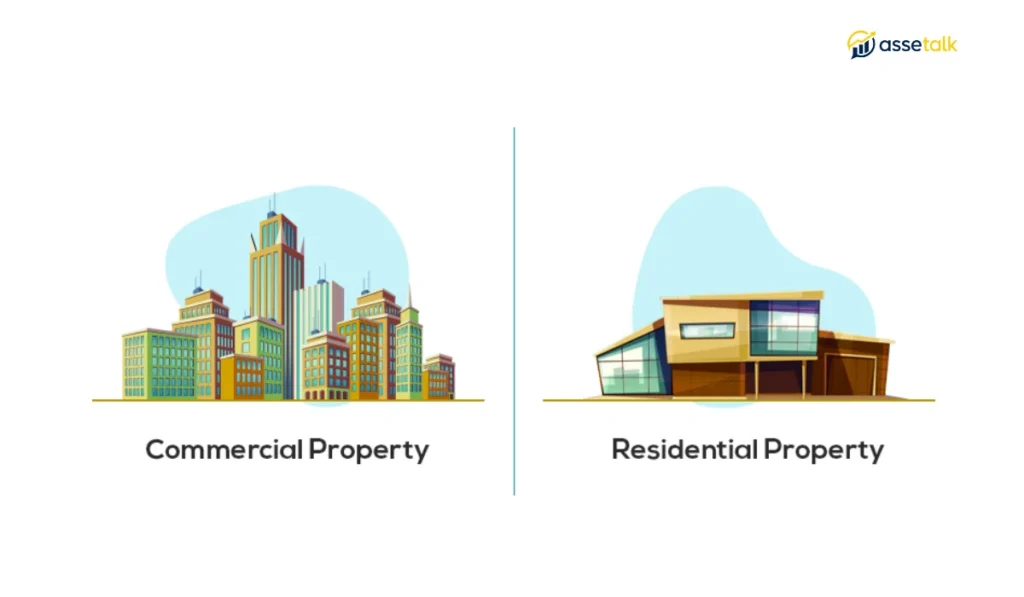
When diversifying your portfolio, you may choose between housing individuals or business tenants. Both asset classes feature distinct advantages and profiles.
While residential assets offer easier entry and steady demand, entering commercial property deals gives investors access to long-term leases, net-lease structures (where tenants pay taxes and maintenance), and higher yield potential.
Acquiring a property is only half the job; effective management protects the asset and guarantees consistent cash returns over time.
The single best maintenance protection is finding qualified tenants upfront. Always enforce strict screening standards:
Set aside 5% to 10% of monthly rents into a dedicated capital expenditure (CapEx) reserve fund. Address small issues-like minor roof leaks or plumbing drips-immediately before they deteriorate into thousands of dollars in emergency structural repairs.
Real estate holds inherent risks including market downturns, bad tenants, unexpected repairs, and economic shocks. Managing these threats keeps your portfolio solvent over decades.
Never run a real estate portfolio with zero cash reserves. Keep 3 to 6 months of mortgage payments and operating expenses liquid for every property in your portfolio to weather unexpected vacancy periods easily.
Secure comprehensive landlord insurance policies that include general liability coverage, building replacement coverage, and loss-of-rent protections if the property becomes unlivable due to insured damages.
Avoid concentration risk by spreading investments across different geographical postcodes or diversifying asset classes between single-family homes, multi-family units, and commercial spaces.
Taking your first steps into real estate requires clear, systematic execution. Use this step-by-step roadmap to move from planning to acquisition:
Building wealth through property is a marathon, not a sprint. Success relies on disciplined analysis, understanding local markets, maintaining conservative leverage, and operating assets with structured professionalism. By sticking to the fundamentals outlined in this guide, you can confidently navigate real estate markets and construct a resilient portfolio that delivers passive income and long-term financial security for years to come.