Mutual Funds Explained: How They Work, Types, Benefits, Risks and Investing Guide
Navigating the world of personal finance can often feel like deciphering a foreign language. With terms like asset…
Read article →

If you have ever wondered how investing works, the answer is more straightforward than most people expect. Investing is the process of using money you already have to buy assets that can grow in value or generate income over time. Instead of leaving cash idle in an account that barely keeps up with rising prices, you put that money to work so it can start contributing on its own.
Understanding how investing works removes much of the mystery and helps you decide whether it belongs in your financial life.
At its simplest, investing means using your money to buy assets that could grow in value or generate income over time. These assets might include shares, investment funds, bonds or property. Your investment can make money in two main ways: the value of the asset may rise, creating a capital gain when you sell, or it may provide income through dividends or interest. Unlike saving, which focuses on keeping your money safe and easily accessible, investing involves accepting some level of risk.
The key idea is that your money has the potential to work for you. While investment values can rise and fall in the short term, the goal is usually to build wealth and increase your purchasing power over the long term.
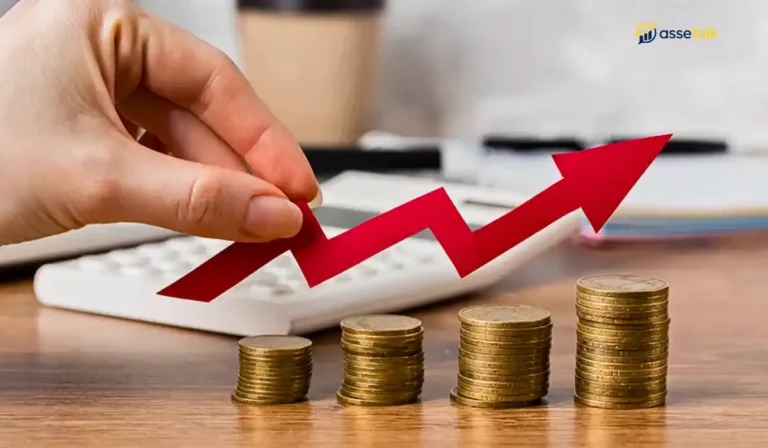
One of the most important parts of how investing works is the effect of time. When the returns you earn are left in place, they begin to generate their own returns. This compounding process starts slowly and gathers pace. Over many years it can turn regular contributions into significantly larger sums.
Two people who invest the same monthly amount can finish with very different results simply because one started earlier. The extra years of growth do most of the work. This is why the practical answer to how investing works always includes the same advice: begin as soon as your situation allows, even if the first amounts feel modest. Waiting for perfect conditions usually costs more than starting imperfectly.
Market timing the attempt to buy only at the lowest points and sell only at the highest is far harder than it appears. Prices move for reasons that are often clear only afterwards. A more reliable approach is to invest steadily through both rising and falling periods. When prices are lower you acquire more for the same outlay; when they recover, the units you already own increase in value. Consistency matters more than perfect entry points.
How investing works in daily practice rests on a small number of asset types. Shares give you a slice of a company’s future. When the business does well, the value of your holding can rise and you may receive a share of the profits. Prices can swing in the short term, yet over longer stretches the overall market has tended to reward patience.
Bonds are loans you make to governments or companies. You receive interest along the way and your capital back at the end. They usually move less than shares and help steady a portfolio. Funds collect money from many people and spread it across dozens or hundreds of holdings. A low-cost index fund that follows a broad market delivers instant diversification and keeps charges down, which is why many long-term investors prefer them.
Property can deliver both rental income and rising values over time. Buying bricks and mortar directly needs substantial capital and ongoing effort. Property funds offer a simpler route for smaller sums. Cash remains useful for money you may need soon, but it rarely drives meaningful long-term growth on its own.
How investing works best when risk is matched to real life. Risk is not an abstract number it is the chance that your money will be worth less than you need at the moment you need it. Someone with decades until a major goal can usually accept larger short-term swings because there is time to recover. Someone who will need the money in three or four years cannot.
A practical way to organise this is to separate money by purpose and time horizon:
This keeps the process connected to actual needs rather than to short-term market movement.
Many people abandon a sensible plan after a sharp market fall and lock in losses. Others chase whatever performed best in the recent past and end up buying at elevated prices. Some overlook costs and allow fees to claim a meaningful share of their returns. A few treat investing as entertainment and trade too often.
The common thread is reaction to short-term movement. Markets will rise and fall. How investing works most effectively is when behaviour stays steadier than the prices on the screen.
How investing works is not mysterious. You convert surplus cash into ownership of productive assets, give those assets time to compound, keep costs low, contribute regularly, and stay the course through ordinary market cycles. It does not require special insight or perfect timing. It requires clarity of purpose, a sensible spread of holdings, and the discipline to let time do its work.
Your earnings from work cover the present. Invested capital can gradually take on more responsibility for the future. The earlier the process begins, the less pressure falls on later income. That is how money starts working for you rather than simply sitting still.