The Ultimate Property Investing Guide: How to Invest in Property and Build Long-Term Wealth
Building lasting wealth through real estate is a time-tested strategy that has created more millionaires than almost any…
Read article →
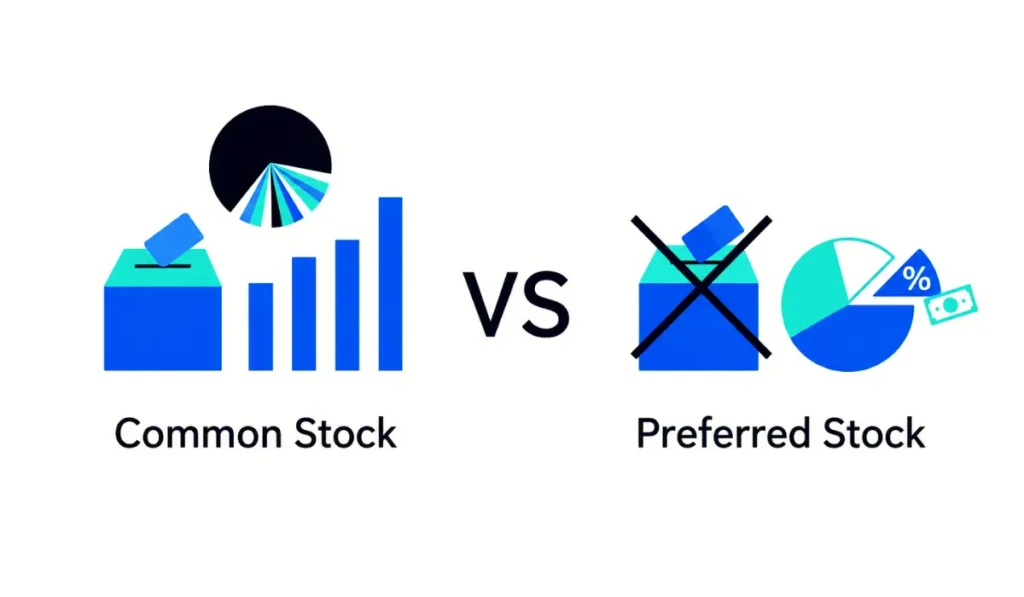
Investing in the stock market remains one of the most reliable ways to build wealth over time. However, when you step into the world of share trading, you quickly discover that not all shares are created equal. One of the most fundamental choices you will encounter is deciding between common vs preferred stock.
While both options represent genuine ownership in a company, they operate on completely different mechanics. One gives you a voice in how the business is run and unlimited upside potential, while the other functions more like a steady income stream with built-in financial protections.
Understanding the distinction between common vs preferred stock alongside how company size impacts your portfolio is crucial for tailoring your strategy to match your personal goals, risk tolerance, and time horizon. Here is a clear, comprehensive guide breaking down how each share type works, their key differences, their pros and cons, and how to decide which option is right for you.
Common stock is the standard type of equity issued by most public companies. When everyday retail investors buy shares through a brokerage account, they are almost always purchasing common stock.
When you hold common stock, you become a part-owner of the company. This ownership comes with voting rights, typically allowing you one vote per share on major corporate decisions. These decisions include electing the board of directors, approving mergers, or voting on executive compensation packages during annual general meetings (AGMs).
The primary attraction of common stock is its growth potential. If the company expands, innovates, and increases its profitability, the market value of your shares can rise significantly.
Additionally, companies may choose to pay dividends to common shareholders out of their profits. However, these dividends are never guaranteed; the board of directors can reduce, skip, or cancel them altogether if the business faces tough financial times.
Preferred stock is often described as a hybrid security because it blends features of standard equity shares with the stability of fixed-income bonds.
Unlike common stock, preferred shares usually carry no voting rights. Investors holding preferred stock do not get a say in corporate governance or board elections. In exchange for giving up voting power, preferred shareholders receive special financial privileges—hence the term “preferred.”
The main feature of preferred stock is its fixed, regular dividend payout. When a company issues preferred shares, it establishes a set dividend rate (either a fixed amount or a fixed percentage of the share’s par value) that is paid out on a predictable schedule, such as quarterly or semi-annually.
Furthermore, preferred shareholders have “preference” over common shareholders. This means the company must pay out all preferred dividends before distributing any dividends to common stock holders. If the business goes bankrupt and is liquidated, preferred shareholders are also paid back out of company assets before common shareholders see a single penny.
To better understand how these two asset classes compare, let us break down their main operational differences across key investment categories.
| Feature | Common Stock | Preferred Stock |
| Voting Rights | Yes (typically one vote per share) | Usually no voting rights |
| Dividend Yield | Variable and non-guaranteed | Fixed and predictable |
| Payout Priority | Lowest priority | High priority (before common stock) |
| Growth Potential | High (unlimited upside) | Limited (tethered to fixed par value) |
| Volatility | High price fluctuations | Lower, more stable price movements |
| Liquidation Priority | Behind all debt holders and preferred stock | Ahead of common stock, behind bondholders |
Common stock holders are the true voting members of a company. If you want a say in corporate direction, corporate ethics, or executive appointments, common stock provides that platform. Preferred stock holders are generally passive investors who trade governance rights for steady payments.
Common stock dividends fluctuate based on company earnings and board approval. In lean years, common dividends are frequently cut to conserve cash. Preferred stock dividends, on the other hand, are fixed from the outset.
In addition, many preferred shares are “cumulative.” If a company hits a rough patch and pauses preferred dividends, the missed payments accumulate as debt owed to preferred shareholders. The company cannot pay any common dividends until all accumulated preferred dividends are fully settled.
If a small technology company turns into the next global giant, common stock value can multiply tenfold or more. Preferred stock rarely experiences huge price rallies. Its market price remains fairly stable, fluctuating closer to interest rates than to operational growth, much like a corporate bond.
If a business fails and files for bankruptcy, a strict payment order applies during asset liquidation:
Common shareholders are at the very bottom of the ladder. They only receive funds if every debt holder and preferred shareholder has been paid in full, meaning they frequently lose their entire investment in an insolvency scenario.
When choosing between share types, company size (market capitalisation) also influences your risk and return:
Choosing between common vs preferred stock depends entirely on your current financial situation, investment timeline, risk tolerance, and company size preferences. Neither choice is universally superior; each serves a distinct role in portfolio design.
You do not have to limit yourself strictly to one option. Many experienced investors construct a resilient portfolio by combining these different share types and market capitalisations.
By holding common stock in high-growth small-cap or mid-cap sectors alongside preferred shares in steady, large cap utilities or financial institutions, you can capture exciting upside potential while anchoring your wealth with predictable income.
Understanding the dynamics of common vs preferred stock and how company size impacts risk puts you in complete control of your financial journey. Aligning your share selections with your broader personal goals ensures your portfolio is built to weather any economic climate.