The Ultimate Property Investing Guide: How to Invest in Property and Build Long-Term Wealth
Building lasting wealth through real estate is a time-tested strategy that has created more millionaires than almost any…
Read article →
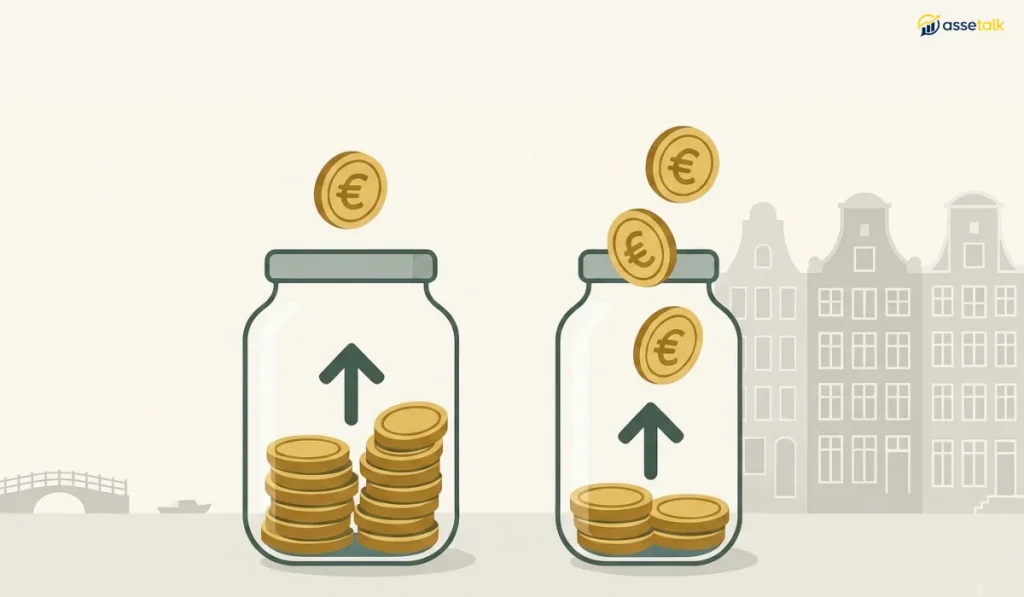
When you first start exploring Exchange-Traded Funds (ETFs), you will likely notice two small three-letter abbreviations tagged on the end of fund names: Acc and Dist. At first glance, they look like minor technical labels. However, this distinction represents one of the most important decisions you will make as an index investor. Choosing between an accumulating ETF and a distributing ETF determines how your dividends are managed, how fast your wealth compounds, and how your investments are taxed. Whether you are building a retirement nest egg from scratch or seeking a steady stream of passive income to cover living expenses, understanding this difference is essential.
When you buy shares in an ETF that tracks an index like the S&P 500 or the MSCI World, you are indirectly owning hundreds or thousands of underlying companies. Many of these companies such as Apple, Microsoft, or Coca-Cola regularly pay dividends to their shareholders. For investors exploring ETF Investing, understanding how these dividends are handled is essential. The fund manager receives those dividend payments on your behalf. What happens next depends entirely on whether you hold an accumulating or distributing share class.
An accumulating ETF automatically takes all the cash dividends collected from underlying holdings and reinvests them back into the fund. You do not receive any cash in your brokerage account. Instead, the fund uses the money to buy additional shares of the companies in the index. Because the total value of assets inside the fund increases, the Net Asset Value (NAV) and share price of your ETF rise accordingly.
A distributing ETF collects those same dividends and pays them out directly to you as cash. Depending on the ETF’s policy, these payouts are deposited into your brokerage account on a regular schedule-usually quarterly, semi-annually, or annually. You can then withdraw this cash to spend as passive income or manually choose to reinvest it elsewhere.
To understand accumulating ETFs, imagine owning a fruit tree. Every time the tree produces fruit, rather than picking the fruit to eat right away, you plant the seeds immediately back into the soil to grow more trees. Over time, your single tree expands into a orchard, producing far more fruit in the future.
With a distributing ETF, you receive immediate, tangible cash rewards from your investments.
If you hold 500 units of a global stock ETF trading at $100 per unit, and the fund pays a 2% annual dividend yield distributed quarterly, you would receive roughly $250 in cash every three months ($1,000 per year) directly in your account.
To see how these two ETF share classes compare side-by-side, take a look at the summary table below:
| Feature | Accumulating ETF (Acc) | Distributing ETF (Dist) |
| Dividend Handling | Automatically reinvested into the fund | Paid out as cash to your brokerage account |
| Primary Goal | Capital growth and maximum wealth creation | Income generation and liquidity |
| Compounding Potential | Maximum (fully automated compounding) | Moderate (requires manual reinvestment) |
| Maintenance Level | Passive / Set-and-forget | Requires active monitoring if reinvesting |
| Reinvestment Costs | None (handled internally by fund) | Potential trading fees per manual order |
| Best Suited For | Young investors & long-term wealth building | Retirees & income-focused investors |
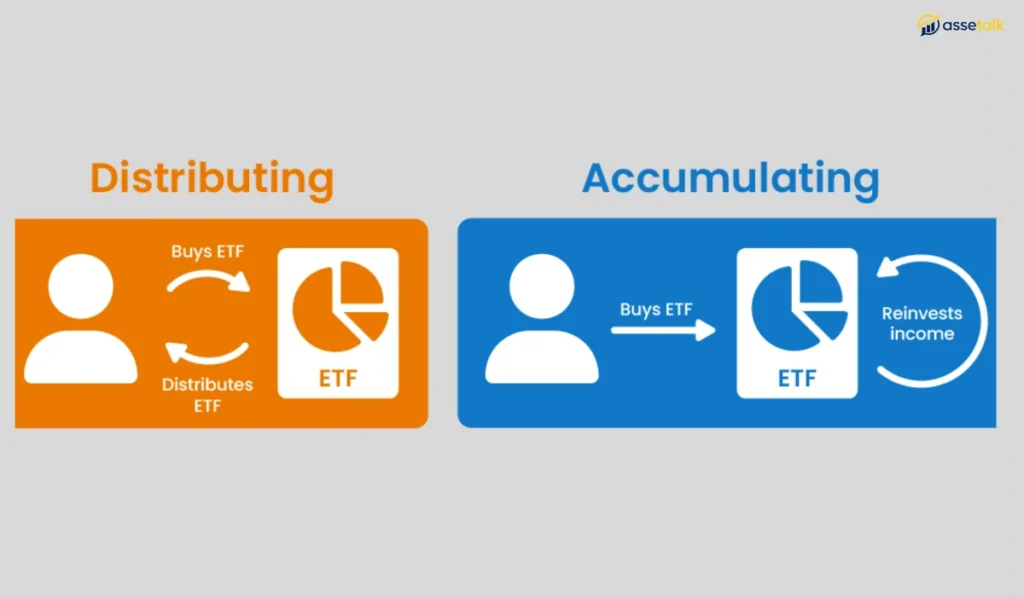
Before making your choice, evaluate these key factors against your personal financial situation.
Even a seemingly small dividend yield of 2% makes a massive difference over 20 to 30 years due to the mechanics of compound interest.
For example, an initial $10,000 investment growing at an average market return of 7% per year would reach approximately $76,122 after 30 years in an accumulating fund.
If you held a distributing fund and spent the 2% dividend yield each year instead of reinvesting it (earning only 5% capital growth), your portfolio value would reach roughly $43,219. That is a difference of over $32,900 on a single $10,000 investment.
Tax regulations vary depending on your country of residence, but tax treatment is often a decisive factor when choosing ETF share classes.
Where you are in your financial journey plays a major role in determining which option is superior:
An accumulating ETF is generally best if your goal is long-term growth, you have a multi-year horizon, and you prefer an automated investment approach that minimizes fee drag and tax liabilities. A distributing ETF is the ideal pick if you require regular cash payments to fund retirement, want cash on hand to manually rebalance your portfolio, or get peace of mind from watching dividend payments land in your account. Matching the fund type to your current life stage ensures your portfolio works efficiently to support your long-term goals.