The Ultimate Property Investing Guide: How to Invest in Property and Build Long-Term Wealth
Building lasting wealth through real estate is a time-tested strategy that has created more millionaires than almost any…
Read article →
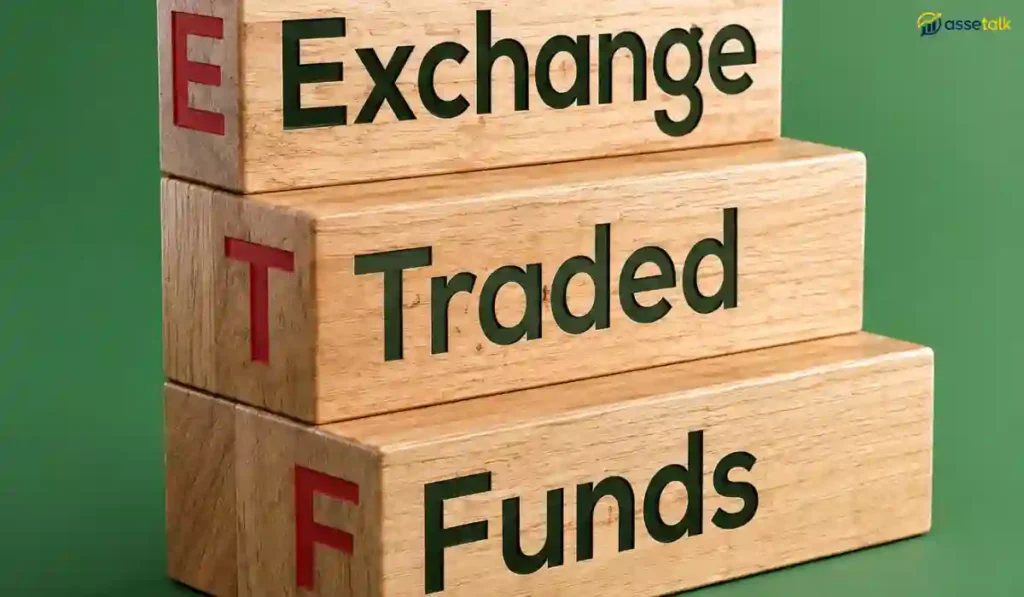
Investing used to feel like a choice between two uncomfortable extremes. On one side was stock picking-a strategy that required endless hours studying balance sheets, following quarterly earnings reports, and hoping a single company’s board wouldn’t make a disastrous strategic misstep. On the other side was traditional mutual funds, which often came with high management fees, complex fee structures, and minimum investment thresholds that priced out everyday investors. Over the past two decades, ETF investing has fundamentally reshaped that landscape. Exchange-Traded Funds (ETFs) have grown from a niche financial product into the primary wealth-building tool for millions of personal investors worldwide. Whether your aim is building a retirement nest egg, creating a steady stream of passive dividend income, or putting excess cash to work, understanding how to construct a robust portfolio around ETFs is one of the most practical financial skills you can cultivate.
At its core, an Exchange-Traded Fund is a pooled investment vehicle that holds a basket of underlying assets-such as stocks, bonds, commodities, or alternative investments. When you purchase a single share of an ETF, you instantly acquire fractional ownership of every single security contained within that basket. To understand the core appeal of these vehicles, it is helpful to contrast ETFs & individual stocks. Purchasing equity in a single business ties your financial outcome entirely to that specific company’s executive decisions, market demand, and operational execution. If that business stumbles, your capital takes a direct hit. By contrast, an equity ETF bundles dozens, hundreds, or even thousands of companies into one instrument, allowing you to achieve instant diversification without placing multiple separate trades.
What makes ETFs uniquely versatile is where and how they trade. Unlike traditional open-ended mutual funds-which only calculate their Net Asset Value (NAV) and execute buy or sell orders once per day after market close-ETFs trade on public stock exchanges throughout the trading session. You can buy or sell ETF shares at market price at any point during standard market hours, using standard order types such as market orders, limit orders, and stop-loss instructions.
The best ETFs for beginners are generally funds that are easy to understand, well diversified, low cost and suited to a long-term investment strategy. An ETF (exchange-traded fund) is a basket of investments that trades on a stock exchange, allowing investors to gain exposure to multiple assets through a single fund.
Beginners may consider broad-market ETFs, S&P 500 ETFs, total stock market ETFs, international ETFs or bond ETFs, depending on their goals and risk tolerance. When comparing ETFs, important factors include the expense ratio, diversification, liquidity, holdings, past performance and investment objective. A low-cost ETF can help reduce the impact of fees over time.
Choosing the best ETF is not simply about finding the fund with the highest returns. Beginners should understand what an ETF owns and consider whether it fits their investment goals, time horizon and risk level.
Pricing Anchor: To make informed decisions, investors should understand how ETF pricing remains anchored to the value of its underlying holdings.
Intraday Fluctuation: The trading price of an ETF share fluctuates constantly throughout the day based on supply and demand, but it rarely strays far from the aggregate market value of the assets inside the fund.
Arbitrage Mechanism: This price alignment is maintained through an institutional mechanism known as the creation and redemption process.
Role of Authorized Participants: Specialized institutional entities known as Authorized Participants (APs) monitor discrepancies between an ETF’s trading price and its Net Asset Value.
Handling Premiums: If an ETF trades at a slight premium to its underlying assets, APs purchase the underlying shares on the open market, deliver them to the ETF provider, and receive newly created ETF shares to sell into the market.
Handling Discounts: Conversely, if an ETF trades at a discount, APs purchase the ETF shares and redeem them for the underlying assets.
Intrinsic Value Alignment: This continuous arbitrage mechanism keeps market prices tightly aligned with real intrinsic value.
Structural Impact on Capital: Structure also dictates how capital flows within these funds.
Market Distinctions: When looking across the funds available on major exchanges, you will encounter structural distinctions such as open-ended & closed-ended ETFs, which determine how shares are issued and traded in the secondary market.
Open-Ended Share Supply: Most popular index-tracking ETFs are structured as open-ended funds, meaning the supply of shares can expand or contract daily to match investor demand without causing major pricing dislocations
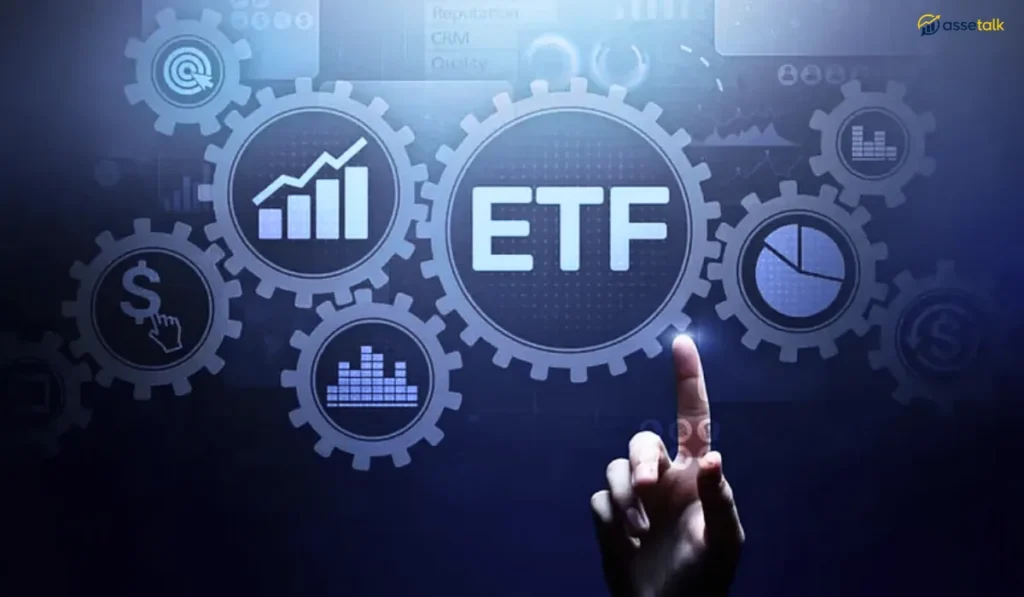
Why has capital migrated so aggressively into ETFs over the past decade? The shift is driven by structural benefits that make these instruments exceptionally efficient for long-term wealth accumulation.
Achieving broad portfolio diversification used to require significant capital and substantial transaction costs. An ETF tracking a major market index-such as the S&P 500 or the MSCI World Index-allows an investor to gain exposure to thousands of top-tier global companies for as little as $50 or $100. By spreading your investment across multiple companies, sectors, and geographic regions, you eliminate single-stock vulnerability.
Fees act as a drag on long-term compound growth. Because most ETFs track predefined indices automatically, they do not require expensive teams of financial analysts or active stock pickers. Consequently, their ongoing management fees-expressed as the Expense Ratio-are significantly lower than those of traditional funds. A standard broad-market ETF might charge an annual expense ratio of just 0.03% to 0.07% ($3 to $7 per year for every $10,000 invested), whereas actively managed vehicles frequently charge 0.75% to 1.50% or more.
Because ETFs trade like standard equity shares, investors maintain complete flexibility. You can enter or exit a position instantly during trading hours, employ risk-management tools like limit orders, and easily rebalance your portfolio whenever market shifts demand it.
Tax drag can silently erode investment returns over time. Understanding ETF tax considerations is vital for optimizing net long-term returns. Because the creation and redemption mechanism relies on in-kind asset transfers between Authorized Participants and the fund, ETFs rarely need to liquidate underlying securities to meet investor redemptions. This structural feature significantly minimizes internal capital gains distributions compared to traditional pooled funds, putting more control over the timing of capital gains tax liabilities directly in the hands of the investor.
Before allocating funds, it is essential to compare ETFs directly against alternative structures to ensure they fit your specific financial goals and management style.
While both vehicles pool investor money to purchase diversified asset portfolios, key operational differences separate them. When evaluating ETFs & managed funds, liquidity and cost structure stand out as the primary differentiators. Mutual funds are typically managed by human fund managers aiming to beat the market, which results in higher expense ratios, minimum initial investment thresholds, and end-of-day pricing. ETFs prioritize low-cost, automated tracking with real-time liquidity and no minimum buy-in requirements beyond the price of a single share.
| Feature | Exchange-Traded Funds (ETFs) | Traditional Mutual Funds | Individual Stocks |
| Trading Schedule | Throughout market hours | Once daily after close | Throughout market hours |
| Average Expense Ratio | Low (0.03% – 0.35%) | Medium/High (0.50% – 1.50%+) | None (Transaction fees only) |
| Diversification | Instant (Hundreds/Thousands) | Instant (Broad holdings) | None (Single company focus) |
| Minimum Investment | Price of 1 share (or fractional) | Often $1,000 – $3,000+ | Price of 1 share (or fractional) |
| Tax Efficiency | High (In-kind creations) | Moderate (Capital gain payouts) | High (Controlled sales) |
Another major structural distinction revolves around investment philosophy. When exploring available fund options, you will encounter both active ETFs & passive ETFs. Passive ETFs simply aim to replicate the performance of a specific benchmark index, such as the S&P 500, the FTSE 100, or the Nasdaq 100. They follow strict rules, incur low operational costs, and deliver market-matching returns. Active ETFs, on the other hand, employ portfolio managers who actively select securities, adjust weightings, and execute trades to outperform a benchmark index or manage downside risk. While active ETFs offer potential outperformance, they generally carry higher expense ratios and rely heavily on manager skill.
The universe of ETFs extends far beyond basic stock indexes. Modern investors can access virtually every asset class and strategy through targeted funds:
If your ETF holds dividend-paying stocks or interest-bearing bonds, those underlying assets generate regular cash flow. How that income is treated depends on the fund’s distribution structure. When selecting funds, particularly in international markets, you will choose between accumulating & distributing ETFs.
| Feature | Distributing ETFs | Accumulating ETFs |
| Handling of Dividends | Collects dividend income from underlying assets and pays it directly to investors as cash. | Reinvests incoming dividend payments back into the fund’s underlying capital automatically without issuing cash payouts. |
| Payout Frequency | Paid out at regular intervals (quarterly, semi-annually, or annually). | No cash payouts issued. |
| Impact on Growth & Value | Provides direct cash flow for living expenses. | Increases the Net Asset Value per share over time, accelerating growth through compounding. |
| Tax & Operational Impact | Requires manual reinvestment if growth is desired. | Avoids triggering immediate tax events and requires no manual reinvestment. |
| Best Suited For | Retirees or income-focused investors relying on cash distributions. | Growth-focused investors looking to build long-term capital efficiently. |
Navigating how dividend income flows into your portfolio is a critical component of managing your overall ETF distribution policy and long-term tax strategy.
With thousands of funds available on public exchanges, deciding how to choose an ETF requires a methodical, step-by-step evaluation process. Here are the crucial metrics every investor must assess before clicking buy:
The ETFs expense ratio is the annual percentage fee deducted directly from fund assets. All else being equal, choose funds with lower expense ratios. For standard market index trackers, target funds charging under 0.15% per year.
A passive ETF’s job is to replicate its underlying index accurately. Tracking difference measures the total return divergence between the ETF and its index over a set period, while tracking error measures the volatility of that difference. High-quality funds maintain minimal tracking differences that closely match their published expense ratios.
Look for funds with healthy Assets Under Management (AUM) ideally above $100 million. Larger funds are less likely to be liquidated by the provider and typically enjoy greater market liquidity. Higher liquidity results in narrower bid-ask spreads, saving you money whenever you buy or sell shares.
Physical ETFs buy and hold the actual securities belonging to the target index. Synthetic ETFs use financial derivatives and swaps with financial institutions to replicate performance. For most retail investors, physical replication offers transparency and eliminates counterparty risk.
To purchase shares, you need an account with a reputable brokerage platform. Compare platforms based on commission costs, platform usability, access to international stock exchanges, and tax-efficient account availability (such as Roth IRAs, traditional IRAs, or ISAs).
Your portfolio allocation should reflect your personal investment timeframe, financial goals, and risk tolerance. Younger investors with multi-decade horizons typically tilt heavily toward growth-oriented equity ETFs (80%–90% equity, 10%–20% bonds). Investors approaching retirement often adjust toward capital preservation and income (50% equity, 50% fixed income).
Log into your trading platform, search for your chosen ETF using its unique ticker symbol (e.g., VTI, VOO, or QQQ), specify the number of shares or total dollar amount you wish to invest, and select your order type. Using a limit order guarantees you buy at your preferred price or better.
Consistency drives compounding wealth. Set up automatic monthly contributions to invest fixed dollar amounts regardless of market fluctuations-a strategy known as dollar-cost averaging. Once or twice a year, review your portfolio and rebalance back to your target asset allocation if market moves have caused it to drift.
ETF investing has democratized financial markets, giving everyday investors access to low-cost, professional-grade portfolio construction that was once reserved exclusively for institutional clients. By combining broad diversification, low expense ratios, and intraday flexibility, ETFs provide a sturdy foundation for long-term financial independence. You don’t need to master complex market timing or spend hours analyzing individual balance sheets to build wealth. By establishing clear investment goals, maintaining a disciplined dollar-cost averaging strategy, and selecting low-cost, broad-market funds, you can let the global economy do the heavy lifting for your financial future.