The Ultimate Property Investing Guide: How to Invest in Property and Build Long-Term Wealth
Building lasting wealth through real estate is a time-tested strategy that has created more millionaires than almost any…
Read article →
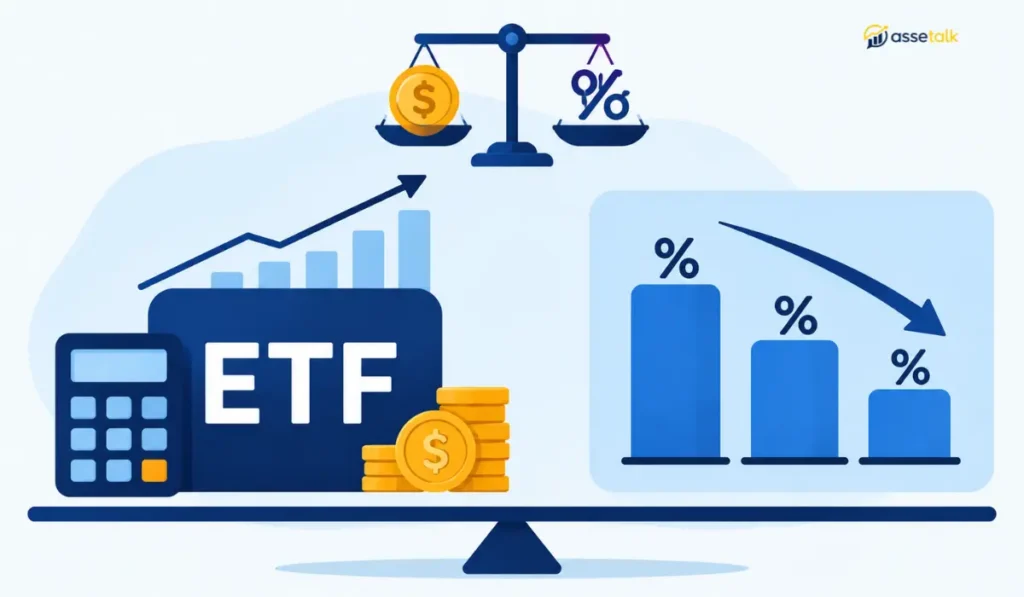
When building an investment portfolio, exchange-traded funds (ETFs) are often praised as one of the most accessible and cost-effective tools available. They allow you to instantly diversify across entire stock markets, global regions, or specific sectors with a single transaction. However, even the most straightforward investment products come with ongoing costs that can quietly nibble away at your returns.
Many investors focus heavily on share prices, market trends, and historical returns, completely overlooking annual management fees. This brings us to a vital yet frequently ignored metric: ETF expense ratios. While a fee fraction of a percent might sound harmless, the hidden cost of high ETF expense ratios can compound over several decades, costing you thousands of pounds in lost gains. Understanding how these fees work is essential for anyone looking to build sustainable, long-term wealth.
An ETF expense ratio is the annual percentage fee that a fund management company charges to cover the operational costs of running the fund. These costs can include portfolio management, administration, legal compliance, auditing and other fund-related expenses. Instead of sending you a separate invoice or deducting money directly from your brokerage account, the fund provider deducts these costs from the total assets of the fund. The expense is reflected in the ETF’s daily net asset value, so investors typically do not see a separate charge.
For instance, if an ETF has an expense ratio of 0.10%, you are paying roughly £1 per year for every £1,000 invested, assuming the investment remains at that level. Although this may seem insignificant, even small differences in fees can become meaningful over long periods.
This is particularly important when comparing different options for ETFs investing, as funds tracking similar markets can have noticeably different expense ratios. Broad-market tracker ETFs may have very low costs, while specialised or actively managed ETFs can charge considerably more.
Not all funds are created equal, and understanding why certain funds carry higher price tags helps you decide whether those extra costs are actually justified for your financial strategy.
While some active fund managers claim their expertise justifies higher fees, decades of market data show that the vast majority of active funds fail to consistently outperform cheap passive index trackers over long periods after accounting for costs.
Before adding any new ETF to your stocks and shares ISA or personal pension, taking a few minutes to review the fee structure can save you substantial amounts over time.
Making a habit of checking these core documents ensures you keep your overall investment expenses as slim as possible without sacrificing quality market exposure.

Slashing your investment costs is one of the very few factors in wealth creation that you can control completely. While you cannot predict market volatility or interest rate changes, you can guarantee lower costs by being a smart consumer.
Focus the majority of your core portfolio on ultra-low-cost core index trackers with expense ratios below 0.15 percent. These funds provide broad diversification at a fraction of the price of specialized options.
If you enjoy investing in niche themes or active strategies, consider treating them as small additions rather than core holdings. Limiting high-cost funds to a small portion of your overall portfolio prevents excessive fees from dragging down your long-term wealth growth.
Regularly review your portfolio every year or two. Fund providers frequently engage in price competition, dropping their expense ratios to win market share, or launching newer, cheaper share classes for existing strategies.
The hidden cost of high ETF expense ratios is one of the quietest drains on personal wealth. A difference of half a percent might feel completely irrelevant on a monthly statement, but over an investment lifetime, it extracts tens of thousands of pounds directly out of your future nest egg.
By taking the time to inspect fund documentation, choosing passive index trackers where appropriate, and keeping management charges low, you keep more of your hard-earned money working for you. Staying vigilant about investment costs is a simple, highly effective step toward securing true financial independence.