The Ultimate Property Investing Guide: How to Invest in Property and Build Long-Term Wealth
Building lasting wealth through real estate is a time-tested strategy that has created more millionaires than almost any…
Read article →

Navigating the financial markets often feels like steering through an endless sea of complex acronyms, volatile charts, and conflicting financial advice. While stock markets capture headline news with dramatic price swings and tech-fuelled rallies, fixed-income assets quietly do the heavy lifting behind the scenes. At the core of this multi-trillion-dollar universe sit Bonds, the foundational building blocks of personal wealth preservation, institutional portfolios, and global finance.
Understanding how fixed income fits into your financial roadmap is critical whether you are building your first investment portfolio, planning a comfortable retirement, or simply looking to protect your capital from market turbulence.
A bond is essentially a loan made by an investor to a government, company or other organisation.
When an organisation needs to raise capital, it can issue bonds to investors. In return, the issuer generally promises to pay interest according to an agreed schedule and repay the original amount at a specified maturity date.
For example, imagine a company issues a $1,000 bond with a 5% annual coupon and a five-year maturity. An investor purchasing the bond could receive $50 in annual interest if the coupon remains fixed. At maturity, the issuer would generally repay the $1,000 principal, assuming it does not default.
This arrangement makes bonds different from stock. A shareholder owns part of a company, whereas a bondholder is a creditor of the issuer.
The basic structure is straightforward:
These features work together to determine the potential return and risk of an investment.
To grasp fixed income fully, it helps to contrast it with equity ownership.
Understanding the balance between bonds & stocks helps investors calibrate risk: equity provides long-term growth potential, while fixed income offers stability and consistent cash flow.
Before diving deeper into bond mechanics, you need to master the fundamental language of fixed-income markets.
The face value-often referred to as par value-is the nominal amount of money the issuer agrees to repay at the bond’s maturity date. Standard bonds typically feature face values of $1,000 per unit. When a bond trades on secondary markets, its price fluctuates above or below this par value.
The coupon rate is the annual interest rate paid by the issuer, expressed as a percentage of the bond’s face value. For instance, a bond with a $1,000 par value and a 5% coupon rate pays $50 in interest per year.
The maturity date represents the end of the bond’s life. On this date, the issuer makes its final coupon payment and returns the par value ($1,000) to the current bondholder. Maturities range widely:
Yield measures the actual rate of return generated by a bond, reflecting both its coupon payments and its current market price. Crucially, yield changes dynamically as market conditions shift.
Understanding how bonds work in secondary markets requires looking beyond face value and coupon rates. Once a bond is issued, it trades on open markets where its price fluctuates constantly based on interest rates, economic conditions, and credit ratings.
If there is one non-negotiable rule in fixed income, it is this: Bond prices and bond yields move in opposite directions.
Interest Rates / Yields RISE → Bond Prices FALL
Interest Rates / Yields FALL → Bond Prices RISE
To see why this happens, consider a simple scenario:
Conversely, if central banks cut interest rates and new bonds only pay 4%, your existing 5% bond becomes highly attractive. Its price will climb to a premium above $1,000.
| Market Price Condition | Description | Yield vs Coupon |
| Trading at Par | Market price equals face value ($1,000). | Yield = Coupon Rate |
| Trading at Premium | Market price exceeds face value (e.g., $1,050). | Yield < Coupon Rate |
| Trading at Discount | Market price is below face value (e.g., $950). | Yield > Coupon Rate |
When reviewing fixed-income investments, you will encounter three main yield calculations:
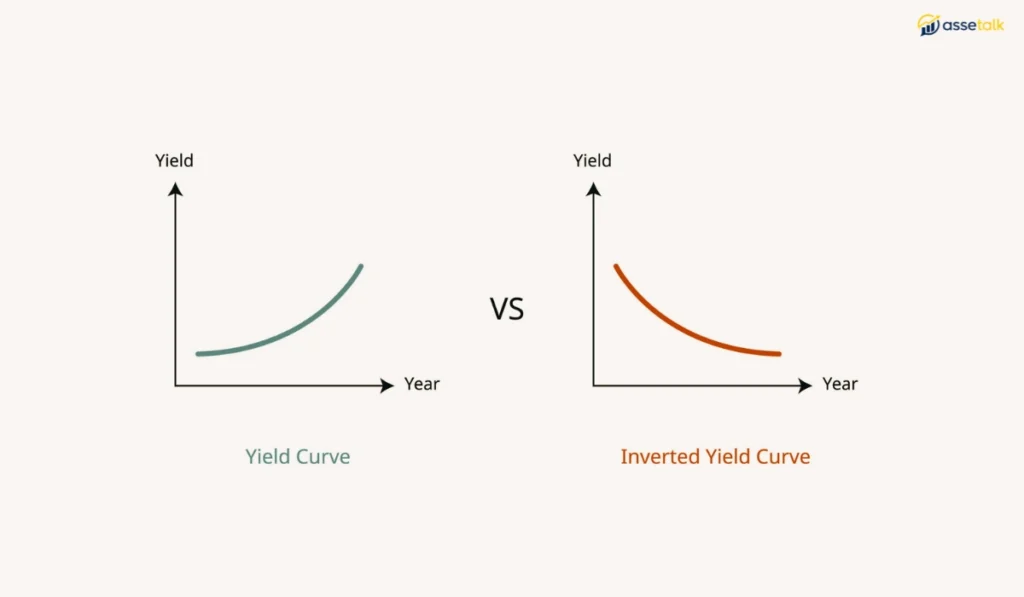
The global bond market is vast, offering solutions for conservative income seekers, growth-oriented investors, and tax-conscious portfolios alike.
Issued by national governments to finance public expenditure, infrastructure, and military needs, sovereign bonds are backed by the full faith and credit of the issuing nation.
Corporations issue bonds to expand operations, fund research, undertake mergers, or refinance debt. Because private companies carry greater default risk than governments, corporate bonds pay higher coupon rates to compensate investors.
When structuring a portfolio, balancing government bonds & corporate bonds allows you to fine-tune your target return against your risk tolerance.
Issued by state, provincial, or local government entities to build schools, highways, and public utilities. In many jurisdictions, income from municipal bonds enjoys exemptions from federal, state, and local income taxes, making them attractive to investors in high tax brackets.
Issued by companies with lower credit ratings, high-yield bonds carry a elevated risk of default. To attract capital, issuers offer high coupon rates. They tend to behave more like equities during economic downturns.
Designed to protect purchasing power, inflation-indexed bonds adjust their principal value in line with consumer price indices (such as the CPI). The primary US example is Treasury Inflation-Protected Securities (TIPS).
Just as consumers hold credit scores, bond issuers receive credit ratings from independent rating agencies-primarily Standard & Poor’s (S&P), Moody’s, and Fitch. These ratings assess an issuer’s financial stability and ability to meet debt obligations.
While fixed income is generally safer than equities, no investment is entirely risk-free. Successful Bond Investing requires a clear understanding of the risks involved.
As established, bond prices fall when interest rates rise. Investors holding individual bonds until maturity will still receive their full par value (assuming no default), but those forced to sell prior to maturity during a rate-hiking cycle may incur capital losses.
Credit risk is the possibility that an issuer will fail to make scheduled interest payments or repay the principal at maturity. Higher credit ratings correspond to lower default risk.
If a fixed bond pays a 3% coupon rate while annual inflation climbs to 4%, your real purchasing power shrinks by 1% each year. Fixed income is particularly vulnerable to unexpected spikes in inflation.
Some bonds-such as major sovereign issues-trade in massive volumes daily and can be converted into cash instantly. Small corporate or municipal issues, however, may trade infrequently, making them harder to sell quickly at fair prices.
Some issuers retain the option to “call” (redeem) their bonds before maturity, usually when interest rates fall. When this occurs, investors receive their principal back early but are forced to reinvest those funds in a lower-yield environment.

How you deploy fixed income depends on your age, timeline, income requirements, and market view. Below are four proven strategies used by individual investors and portfolio managers to build a bond portfolio that matches their financial goals.
The straightforward approach: purchase individual bonds at issue or on the secondary market and hold them until maturity. You collect predictable interest payments throughout the term and receive the par value at the end, eliminating market price fluctuations along the way.
Laddering involves dividing your capital across bonds that mature at staggered intervals (e.g., 1-year, 2-year, 3-year, 4-year, and 5-year maturities).
Why Laddering Works:
This approach splits capital between very short-term bonds (for liquidity and interest rate flexibility) and long-term bonds (for high yields), skipping intermediate maturities altogether.
With this method, you purchase bonds with different issue dates that all mature at the exact same target year in the future. This is ideal for funding known future expenses, such as a child’s college tuition or a home purchase.
To build a well-rounded financial plan, it helps to understand how fixed income compares to cash alternatives and equities.
Evaluating bonds & term deposits shows that while fixed bank deposits offer explicit insurance protections, tradeable fixed income provides greater liquidity, potential capital gains during rate-cutting cycles, and broader exposure to corporate debt markets.
| Asset Class | Risk Level | Primary Objective | Liquidity | Capital Growth Potential |
| Cash / Term Deposits | Very Low | Capital Preservation | High to Moderate | Very Low |
| Bonds | Low to Moderate | Income & Stability | High (Funds) to Moderate | Moderate |
| Equities (Stocks) | High | Long-Term Capital Growth | High | High |
Investors can add fixed income to their portfolios in two primary ways: buying individual securities directly or investing through pooled funds.
Bonds can be useful investments, but whether they are suitable depends on the individual.
They may appeal to investors seeking income, diversification or a potentially more stable asset class than shares. However, bonds are not guaranteed investments. Even highly rated issuers can face unexpected financial or economic pressures. The key is to understand what a particular bond is designed to do. A short-term government security and a long-term high-yield corporate bond can both be called bonds, yet their risk profiles are very different.
Before allocating capital to any fixed-income asset, run through this quick evaluation checklist:
Bonds can play an important role in an investment portfolio by providing potential income, diversification and exposure to fixed-income markets. However, they are not all alike. Government bonds, corporate bonds, high-yield securities, inflation-linked bonds and zero-coupon bonds each have different characteristics. The most important lesson is that a bond’s stated interest rate tells only part of the story. Investors should also consider its price, yield, maturity, credit quality, liquidity, inflation exposure and tax treatment. For beginners, the best approach is often to start with the basics and avoid investments that are difficult to understand. Diversification can also help reduce the impact of problems with a single issuer. Ultimately, successful bond investing is less about finding the highest yield and more about understanding the relationship between risk, return, time and income. By evaluating those factors carefully, investors can make more informed decisions about whether bonds belong in their portfolios.